China Top 10 Cobot Robot Manufacturers for Global Buyers
China has become a central force in the global robotics market. The International Federation of Robotics, in its World Robotics 2024 report, recorded 276,288 industrial robot installations in China during 2023. This represented about 51% of worldwide installations. The country also held more than 1.8 million operational industrial robots. These figures show manufacturing scale, but they do not automatically prove product quality.
Collaborative robots are changing how factories approach automation. Interact Analysis has reported strong long-term growth for the global collaborative robot market, supported by electronics, automotive components, logistics, and small-batch production. A Cobot Robot can work beside operators, but real performance depends on more than safe physical interaction. Payload, reach, repeatability, programming, vision compatibility, and after-sales support all matter. Factory trials reveal details that brochures often miss.
This guide examines China’s top 10 Cobot Robot manufacturers for global buyers. It considers product portfolios, application experience, software ecosystems, safety documentation, export capability, and service networks. International buyers should also review ISO 10218 and ISO/TS 15066-related compliance information before deployment. Certification claims require verification for each model and market. No ranking is perfectly universal. A packaging line may value speed, while an electronics plant may prioritize delicate motion and compact design. That is the uncomfortable part.
Price alone can mislead. Spare-part availability, training quality, integration costs, and downtime often decide the final return on investment. The selected manufacturers are therefore assessed through practical buying criteria, published industry evidence, and realistic deployment concerns. Some conclusions remain open to debate, because regional support and application complexity can change the result.
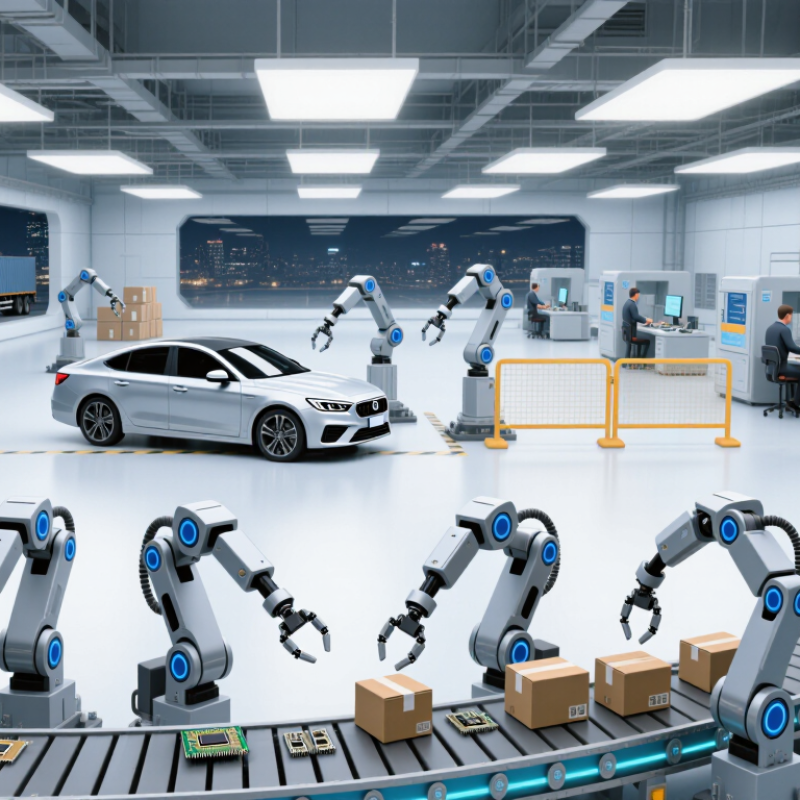
What Are Collaborative Robots and Why Choose Chinese Manufacturers?
Collaborative robots, or cobots, are designed to work near people without a traditional safety cage. They use force sensing, speed control, and monitored joints to reduce contact risks. A trained operator can guide the arm by hand, then repeat the saved movement. This suits tasks such as machine tending, packing, screwdriving, and quality inspection. Small footprints matter. A cobot can fit beside a narrow production line.
Chinese manufacturers attract global buyers through strong engineering capacity and competitive production costs. Many offer different payloads, reach lengths, grippers, vision systems, and software options. Their dense supplier networks can shorten parts sourcing and support practical customization. Buyers should still verify more than the catalogue. Check safety documentation, electrical compatibility, repeatability tests, spare-part access, and remote support response times. Ask for a live demonstration using your actual workpiece, not a polished sample.
The lowest quotation is not always the best value. Integration, training, and downtime can change the final cost. Some suppliers communicate clearly, while others need patient technical clarification. That difference is easy to underestimate. Independent factory audits and reference checks add useful evidence. Certification requirements also vary by destination, so local compliance review remains essential. A careful buyer should compare the robot, software, service process, and long-term maintenance together.
China’s Top 10 Cobot Robot Manufacturers and Their Strengths
China’s top ten collaborative robot manufacturers are not identical.
Their strengths often appear in different parts of the buying process. Some focus on compact six-axis arms for electronics assembly. Others build heavier cobots for palletizing, machine tending, and welding preparation. A few stand out through force sensing, allowing safer insertion of plugs, screws, and small components. Another group emphasizes vision integration, helping robots locate mixed parts on a moving conveyor. Several manufacturers offer modular grippers, quick-change tool plates, and clear software interfaces. These details matter more than attractive brochures.
For global buyers, export readiness is a practical strength.
Useful suppliers provide English manuals, traceable test records, spare-part planning, and remote diagnostic support. They also explain payload limits, cycle-time assumptions, mounting requirements, and safety boundaries without hiding uncomfortable figures. This is where technical experience becomes visible. A factory trial should measure repeatability, recovery after faults, and operator training time. Ask for evidence from a similar application, not only a laboratory demonstration. Still, “top ten” is not a permanent ranking. Prices, service coverage, and software maturity can change quickly. Some systems work well on one line but struggle with dust, glare, or frequent product changes. That weakness deserves attention. Buyers should compare the complete deployment, including integration labor and future maintenance, before choosing a partner.
Key Differences in Products, Applications, and Technical Support
China’s top 10 cobot manufacturers differ sharply in product design, application focus, and technical support. Global buyers should compare more than payload and price. A five-kilogram cobot may suit machine tending, while a heavier model supports palletizing and welding tasks. Reach length, repeatability, installation space, and safety functions also affect real performance.
Practical factory trials reveal important differences. Some cobots offer smooth hand-guiding and simple graphical programming for small workshops. Others provide stronger motion control for vision inspection, packaging, or assembly lines. Check cycle time with your actual workpiece. Test gripper compatibility, cable routing, and recovery after an emergency stop. A polished demonstration can hide difficult integration work.
Technical support often separates acceptable suppliers from dependable partners. Ask whether engineers provide remote diagnostics, offline programming, and clear maintenance manuals. Response time matters when a production cell stops at midnight. Spare-part availability also deserves careful checking. Local service teams may reduce downtime, but coverage differs by country. Do not assume English documentation is complete. Request sample wiring diagrams and training schedules before purchase. A lower quotation can become expensive after integration. Some specifications remain unclear until testing begins, and that weakness deserves honest discussion with the supplier.
How Global Buyers Can Select the Right Chinese Cobot Supplier
China Top 10 Cobot Robot Manufacturers for Global Buyers
Global buyers should evaluate Chinese cobot suppliers beyond product rankings. A convincing demonstration is not enough. Ask for payload charts, reach measurements, repeatability data, and tested cycle times. Request videos from real production lines, not only showroom footage. Suppliers should also provide technical drawings, software manuals, and clear specifications in English.
Factory verification matters. Review assembly processes, component traceability, quality inspection records, and final testing procedures. A reliable supplier can explain how each cobot is calibrated before shipment. Check safety functions, emergency stops, collaborative force limits, and market-specific documentation. Independent laboratory reports can strengthen confidence. Do not accept vague claims.
Run a pilot project with your actual gripper, workpiece, and operator workflow. Measure takt time, positioning accuracy, recovery after a fault, and ease of programming. During one evaluation, a cobot met its accuracy target but struggled with reflective metal parts. That weakness appeared only in our application. It changed the purchasing decision.
After-sales support deserves equal attention. Confirm response times, remote troubleshooting, spare-part availability, training, warranty terms, and local service coverage. Cybersecurity deserves discussion too, especially for connected factory systems. A polished supplier may still lack mature support procedures. Ask difficult questions early, document every answer, and compare performance under identical conditions.