How to Choose the Right Position Sensor for Your Needs?
Choosing the right Position Sensor is crucial for various applications. These sensors detect the position of an object accurately. In robotics, manufacturing, and automotive sectors, their roles are vital. Selecting the correct type can be challenging due to the many options available. Each position sensor has unique features that cater to specific needs.
Understanding your requirements is the first step. Do you need precision or speed? Each application may have different demands. There are many considerations, such as measurement range, resolution, and mounting style. These factors can greatly influence the performance and reliability of a position sensor. A mismatch can result in significant errors and inefficiencies.
Often, people overlook environmental conditions. Heat, dust, or moisture can impact performance. Researching the durability of the sensor is essential to ensure it withstands the operating environment. Reflect on past experiences when choosing sensors. Have previous choices led to successes or failures? This insight can guide you toward making a better decision.
Types of Position Sensors and Their Applications
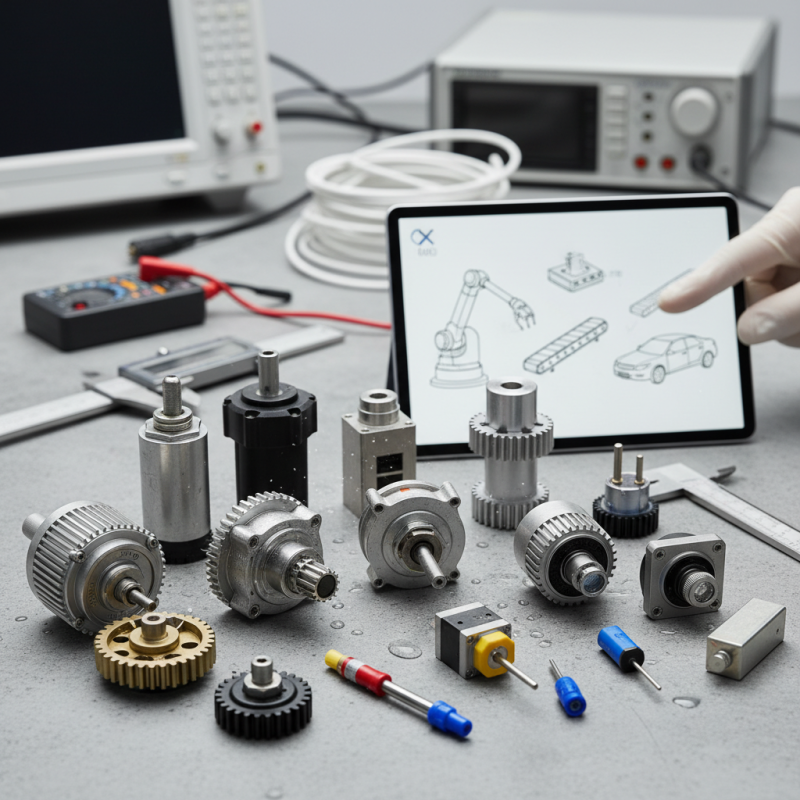
When selecting position sensors, understanding their types and applications is crucial. There are several common position sensors. They include potentiometers, encoders, and linear variable differential transformers (LVDTs). Each has unique strengths suited for different industries.
Potentiometers are cost-effective. They are often used in consumer electronics. According to industry reports, about 30% of position sensors fall into this category. However, they have limited accuracy. Encoders, on the other hand, offer high precision. They are widely used in robotic applications. Their reliability makes them a favorite. Data shows that encoders represent nearly 40% of the market share.
LVDTs are best for high-stress environments. They are frequently found in aerospace and automotive industries. Their ability to provide continuous feedback is a significant advantage. Still, LVDTs can be expensive, making them less accessible for some projects. Too often, people ignore the cost-benefit ratio of each sensor type. Each application's requirements differ significantly. Understanding these nuances helps prevent costly mistakes.
Key Specifications to Consider When Selecting a Position Sensor
Choosing the right position sensor can be challenging. Key specifications play a crucial role. Consider accuracy. How precise does the sensor need to be? In applications like robotics, even a small error can lead to significant issues.
Look at the range as well. Does the sensor need to measure large distances or just small shifts? A too-narrow range can limit its effectiveness. For instance, a sensor suited for micro-movements won’t work for heavy machinery.
Tips: Always check the environmental conditions. Some sensors are not designed for extreme temperatures or humidity. Think about how the sensor will be used. Is it indoors or outdoors? Additionally, pay attention to mounting options. A sensor hard to install and align can create future headaches.
Consider response time. It’s vital for high-speed applications. Sensors that react slowly may cause delays in processes. Look for the best fit for your project. The right choice saves both time and money. Select wisely; the details matter greatly.
Factors Influencing Position Sensor Performance and Accuracy
When selecting the right position sensor, understanding the factors affecting its performance is crucial. The environment where the sensor operates plays a significant role. For instance, extreme temperatures or humidity can lead to inaccuracies. Additionally, vibrations can disrupt the sensor's ability to provide reliable readings. This means that your sensor must withstand the specific conditions of its intended location.
Another key factor is the type of measurement technology used. There are various technologies like capacitive, inductive, and optical. Each has its strengths and weaknesses. For example, optical sensors might offer high precision but can be affected by dirt and dust. On the other hand, inductive sensors, while robust, may have limitations in range. It's essential to weigh these aspects when making a choice.
Finally, consider installation and calibration complexities. Some sensors require precise setup and regular maintenance. This can be challenging in remote locations. An easy-to-install sensor can save time and costs. However, it’s important to ensure that simplicity does not compromise accuracy. Balancing ease of use with performance is often tricky but necessary for effective operations.
Common Challenges in Position Sensor Selection and Solutions
Selecting the right position sensor isn't always straightforward. Users often grapple with various challenges. For instance, understanding measurement range can be tricky. Some sensors may not provide the accuracy needed for specific applications. Users might find themselves unsure about whether to choose analog or digital sensors. Each type comes with distinct advantages and limitations.
Another common issue is environmental conditions. Position sensors in harsh conditions face reliability concerns. They must withstand factors like temperature, humidity, and vibration. Users should consider these aspects closely. Gaskets and enclosures can help protect sensors, but they add costs. Sometimes, budget constraints lead to compromises on quality or functionality.
It's also vital to pay attention to compatibility. Sensors should integrate seamlessly with existing systems. However, users may overlook necessary interfaces or protocols. This oversight can create integration headaches down the line. Understanding specifications beforehand is crucial. Users should ask questions and seek clarification before making decisions.
How to Choose the Right Position Sensor for Your Needs? - Common Challenges in Position Sensor Selection and Solutions
| Sensor Type | Measurement Range | Output Type | Accuracy | Common Applications |
| Potentiometric | 0-100 mm | Analog Voltage | ±0.5% | Robotics, Automation |
| Magnetic | 0-150 mm | Digital Output | ±0.2% | Industrial Machinery |
| Capacitive | 0-50 mm | Analog Voltage | ±0.1% | Touch Screens, Robotics |
| Laser | 0-2000 mm | Digital Output | ±0.01% | Precision Measurement |
| Ultrasonic | 0-3000 mm | Analog or Digital | ±1% | Level Measurement, Robotics |
Best Practices for Installing and Maintaining Position Sensors
Installing position sensors requires attention to detail. Begin by ensuring the sensor is mounted securely. Misalignment can lead to inaccurate readings. Use appropriate mounting brackets for stability. The environment also matters; ensure sensors are protected from dust and moisture. Regularly check these protective measures.
Maintenance is crucial for longevity. Clean sensors gently, avoiding harsh chemicals. Inspect wiring for wear and tear. Simple visual checks can prevent major issues. If a sensor fails, replace it promptly. Ignoring a faulty sensor affects overall performance. Regular calibration is essential. It ensures sensors provide accurate data over time.
Don't overlook the importance of documentation. Keep records of installation dates and maintenance logs. This practice helps identify patterns. Familiarize yourself with common issues. This way, you can react quickly when problems arise. Engaging with peers can also bring insights into best practices.
Position Sensor Types and Their Applications