How to Choose the Right Ball Bearing for Your Project?
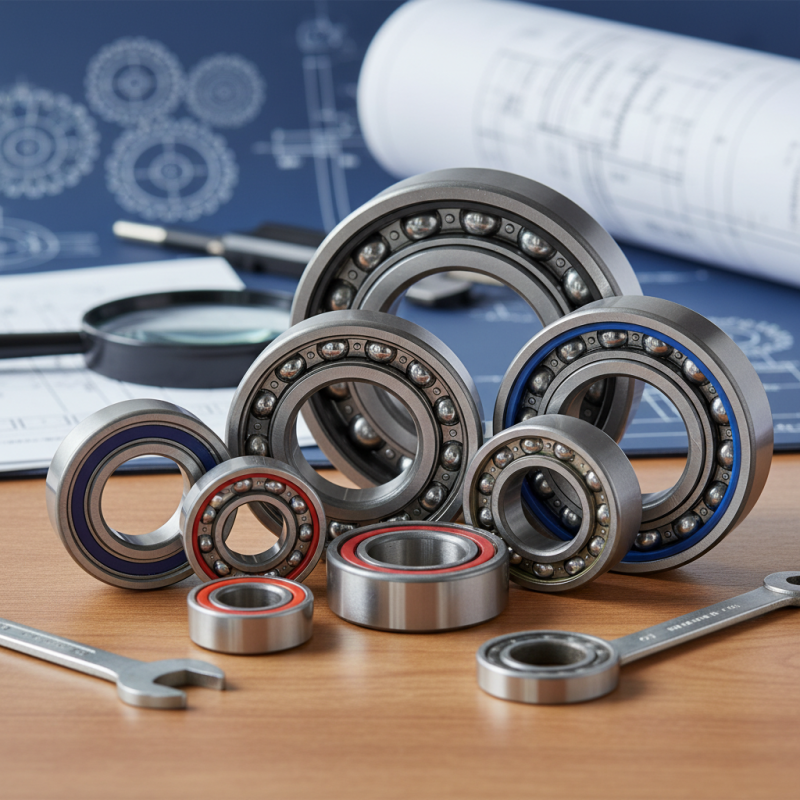
Choosing the right Ball Bearing for your project can seem daunting. With various types available, making an informed decision is crucial. Each ball bearing serves a different purpose, impacting performance and durability.
Consider factors like load capacity and speed. Some ball bearings work better under heavy loads, while others excel in high-speed applications. Material also matters; stainless steel offers corrosion resistance but may be heavier.
Remember, the right choice can enhance efficiency. An incorrect selection can lead to mechanical failure. It is essential to reflect on your project requirements. Think about how the ball bearing interacts with other components. This decision may shape the success of your project.
Understanding the Basics of Ball Bearings and Their Applications
Ball bearings are essential components in countless applications. They reduce friction between moving parts. This allows machines to run smoothly and efficiently. Understanding the basics of ball bearings is crucial for selecting the right type for your project.
There are several types of ball bearings. Each serves a specific purpose. For instance, deep groove ball bearings are versatile and widely used. On the other hand, angular contact bearings are ideal for high-speed and axial load applications. It’s important to consider the load, speed, and environment in which the bearings will operate. Sometimes, the choice might not be straightforward, leading to confusion.
When selecting a ball bearing, one must also consider tolerance levels and materials. High-performance applications may need specialized bearings. However, opting for overly complex solutions can backfire. Simplicity may lead to better performance in some cases. Reflecting on these choices will help in making informed decisions for your projects.
How to Choose the Right Ball Bearing for Your Project?
| Bearing Type | Load Capacity (N) | Speed Rating (RPM) | Material | Typical Applications |
| Deep Groove Ball Bearing | 2000 | 5000 | Steel | Electric motors, Pumps |
| Angular Contact Ball Bearing | 2500 | 3000 | Ceramic | Machine tool spindles, Gearboxes |
| Self-Aligning Ball Bearing | 1500 | 4000 | Stainless Steel | Conveyor belts, Agricultural machinery |
| Thrust Ball Bearing | 1800 | 2000 | Brass | Clutches, Gear systems |
| Hybrid Ball Bearing | 2200 | 6000 | Combination of Ceramic and Steel | High-speed applications, Racing |
Identifying Key Factors for Selecting the Right Ball Bearing
Choosing the right ball bearing can be challenging. Several key factors can influence your decision. Load capacity is essential. Consider how much weight the bearing must support. A heavy load requires sturdier bearings. Different types of bearings have varying load thresholds.
Speed is another aspect to evaluate. If your project involves high speeds, look for bearings designed for such conditions. They must minimize friction. The environment plays a crucial role too. Factors like temperature and exposure to contaminants must be considered. In harsh environments, specialized materials can enhance durability.
Don't forget the size. Bearings come in various dimensions. Selecting one that fits your machinery is critical. A mismatch can lead to failure. Lastly, budget constraints can affect your choice. Expensive doesn’t always mean better. Sometimes, simpler options yield satisfactory performance. Reflecting on these factors can lead to a well-informed decision.
Comparing Different Types of Ball Bearings Available in the Market
Choosing the right ball bearing is essential for any mechanical project. Several types are available, each catering to specific requirements. Deep groove ball bearings are standard in various applications due to their versatility. They can handle radial and axial loads well, making them popular in motors and conveyor systems.
Another type, angular contact bearings, excels in high-speed applications. These bearings can handle combined loads and are commonly used in robotics. According to industry reports, around 40% of failures in machinery are attributed to incorrect bearing selection, highlighting the importance of choosing wisely.
Tip: Always consider load capacity and speed ratings when selecting. It’s crucial to match the bearing to your project specifics. It may be tempting to go for cheaper options, but this could lead to premature failures.
Self-aligning ball bearings offer another viable choice. They accommodate shaft misalignment and are ideal in applications where perfect alignment is challenging. However, they may not handle higher speeds as effectively as others. Understanding the limitations is vital for long-term reliability.
Tip: Assess the working environment. Factors like temperature and humidity impact bearing performance significantly. Do not overlook these details in your project planning.
Evaluating Load Capacity and Speed Requirements for Your Project
When evaluating load capacity, begin by understanding the weight that the bearing needs to support. Load capacity is crucial in bearing selection. It determines the safety and efficiency of operation. According to a 2020 industry report, nearly 30% of bearing failures stem from inadequate load capacity. Using this data, ensure you calculate the dynamic and static load ratings based on your project’s specific needs.
Speed requirements also play a significant role. Different bearings support various RPM (revolutions per minute) ratings. A bearing designed for higher speeds often has a lower load capacity. This balance can be tricky, particularly in high-performance applications. For example, an application operating at 10,000 RPM might require a specialized bearing that can withstand high inertia but with limited load support. Misjudging this balance can lead to wear or failure.
Consider potential discrepancies in your project's specifications. Sometimes, theoretical calculations do not match real-world performance. Inaccuracy in speed estimates or miscalculated loads can result in operational issues. It’s advisable to test bearings under controlled conditions. Observing real-world scenarios can help refine your choices. Adjust as needed to align with your project's demands.
Load Capacity vs. Speed for Different Ball Bearings
Assessing Material and Environmental Considerations for Ball Bearings
When selecting ball bearings, material and environmental factors play a crucial role. Different projects demand specific materials. For example, stainless steel is resistant to corrosion and is often chosen for humid environments. However, it may not withstand extreme temperatures as well as other materials. This can lead to premature failure in applications with fluctuating conditions.
Plastic bearings are another option. They are lightweight and resist chemicals, but they may not handle heavy loads. If your project requires durability, consider ceramic materials. They perform well under high-speed and high-temperature conditions. Yet, they can be brittle, posing a risk of breakage. Evaluate your project's needs carefully.
The environment also matters. Moisture and chemicals can corrode bearings. In some settings, sealing is essential to protect bearings from dirt and debris. An inadequate seal can lead to rapid wear. Reflect on these elements as you decide. What are your priorities? Balancing material properties and environmental challenges is key to choosing the right bearing.