Why Are Robot Motors Essential for Modern Robotics?
Robot motors play a crucial role in the field of modern robotics. These components provide the necessary movement for robots, making them functional and effective. Without robot motors, our robotic systems would remain motionless and incapable of performing tasks.
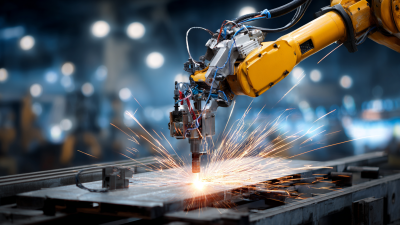
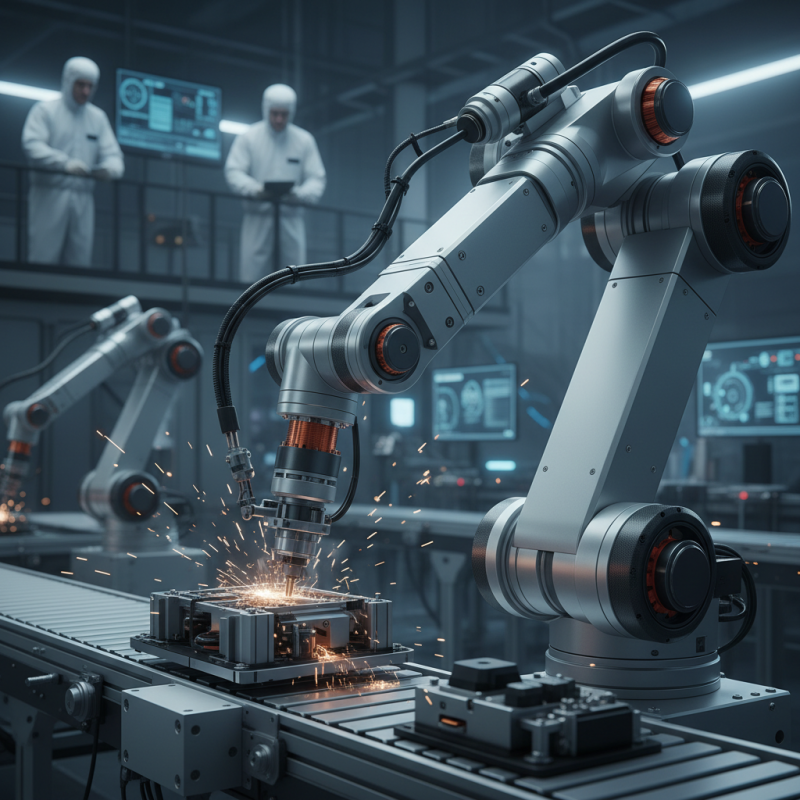
Consider a robot arm in a manufacturing plant. It relies on precise movements to assemble products. The motors deliver speed and torque, ensuring high efficiency. Each motor varies in design and function, appealing to different robotic applications. This diversity challenges engineers to select the right motor for their project.
Yet, despite their significance, many still overlook robot motors' complexity. Selecting an inadequate motor can lead to failures. It's not just about picking a motor; it's about understanding its limitations and strengths. As robotics advances, the quest for better motor technology continues. Through exploration and innovation, we can refine robotic systems further, pushing the boundaries of possibility.
The Role of Robot Motors in Modern Robotics
Robot motors play a crucial role in modern robotics. They are the heartbeat of robotic systems, enabling movement and functionality. According to a report by MarketsandMarkets, the global robotics market is expected to reach $214 billion by 2030, with motors driving much of this growth. These motors convert electrical energy into mechanical energy, giving robots the power to perform tasks.
In applications ranging from manufacturing to healthcare, motors help robots execute precise movements. For example, servo motors allow for accurate positioning. They enhance a robot's ability to carry out complex actions. In contrast, stepper motors provide excellent control over speed and position. Yet, achieving the perfect balance between power and precision is challenging. The design of motor systems requires careful consideration.
Despite advancements, there are limitations. Many robots still struggle with speed and load capacity. Improvements are needed in energy efficiency and reliability. Data from the International Federation of Robotics highlights that not all motors meet the evolving demands of modern applications. This signals a need for continual research and innovation in motor technology.
Why Are Robot Motors Essential for Modern Robotics?
This chart illustrates the importance level of various robot motors in modern robotics, highlighting how different motor types contribute to the functionality and effectiveness of robotic systems.
Types of Motors Used in Robotics
In modern robotics, motor types play a crucial role in functionality. Various motors drive robots, each serving specific needs. DC motors are commonly used for their simplicity and efficiency. They provide continuous rotation, which is great for wheels and joints. Their control is relatively straightforward, though precision can be an issue without adequate feedback systems.
Servo motors offer better control over position. They excel in applications requiring accurate movements. These motors allow robots to perform complex tasks, like precise gripping. They can be a bit more challenging to set up. Misalignment in the control system may lead to poor performance.
Stepper motors are another interesting option. These motors divide a full rotation into smaller steps. They are useful for applications needing careful incremental movements. However, they can lose steps under heavy loads. This can result in unexpected behavior. Integrating feedback mechanisms can help address this challenge. Ultimately, choosing the right motor depends on the specific demands of the robotic application.
Why Are Robot Motors Essential for Modern Robotics? - Types of Motors Used in Robotics
| Motor Type |
Description |
Applications |
Advantages |
| DC Motor |
A type of electric motor that runs on direct current. |
Wheeled robots, conveyor belts |
Simple control, good speed range |
| Servo Motor |
A motor that can be precisely controlled for position and speed. |
Robotic arms, drones |
High accuracy, reliable feedback |
| Stepper Motor |
Divides a full rotation into a large number of steps. |
3D printers, CNC machines |
Precision positioning, open-loop control |
| Brushless DC Motor |
An electric motor that uses an electronically controlled commutation system. |
High-performance applications, electric vehicles |
High efficiency, longer lifespan |
Key Functions of Robot Motors in Motion Control
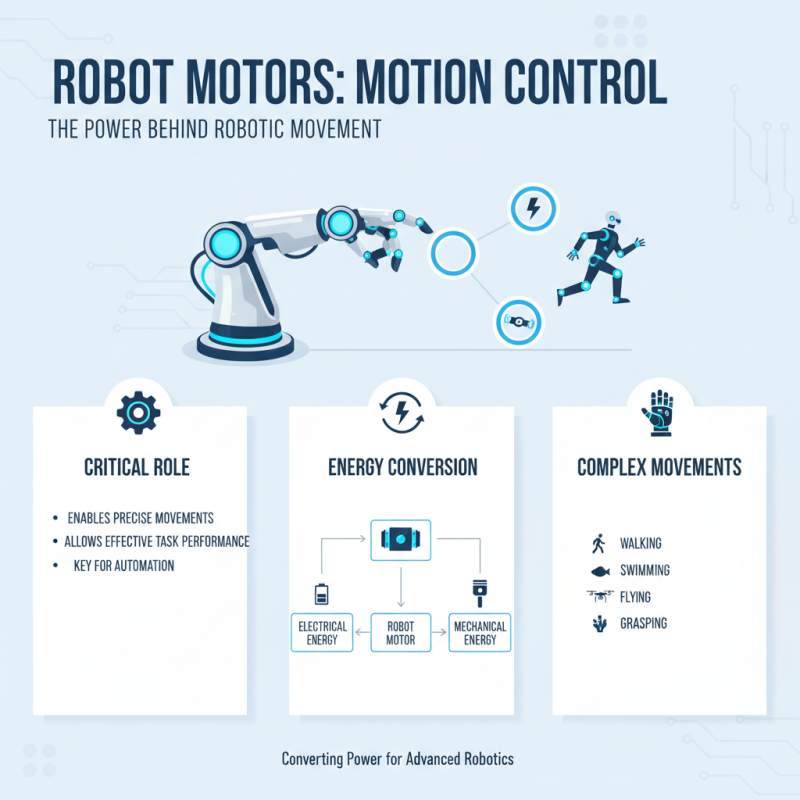
Robot motors play a critical role in motion control within modern robotics. They enable precise movements, allowing robots to perform tasks effectively. These motors convert electrical energy into mechanical energy. This transformation is vital for executing complex movements such as walking, swimming, or flying.
Easy to control and adapt, motors offer various configurations. For instance, stepper motors provide accurate position control. However, they can be less efficient at high speeds. In contrast, servo motors excel in speed but may require more complex control algorithms. These distinctions reveal the need for thoughtful selection in design.
Robotic applications often demand high reliability. Motors must function under various conditions, like temperature changes and load variations. This often leads to challenges in maintaining performance. Engineers must continually evaluate the motor's capabilities to ensure efficiency. In essence, finding the ideal motor for specific tasks remains a nuanced process, requiring ongoing adjustments and improvements.
Advancements in Robotics Motor Technology
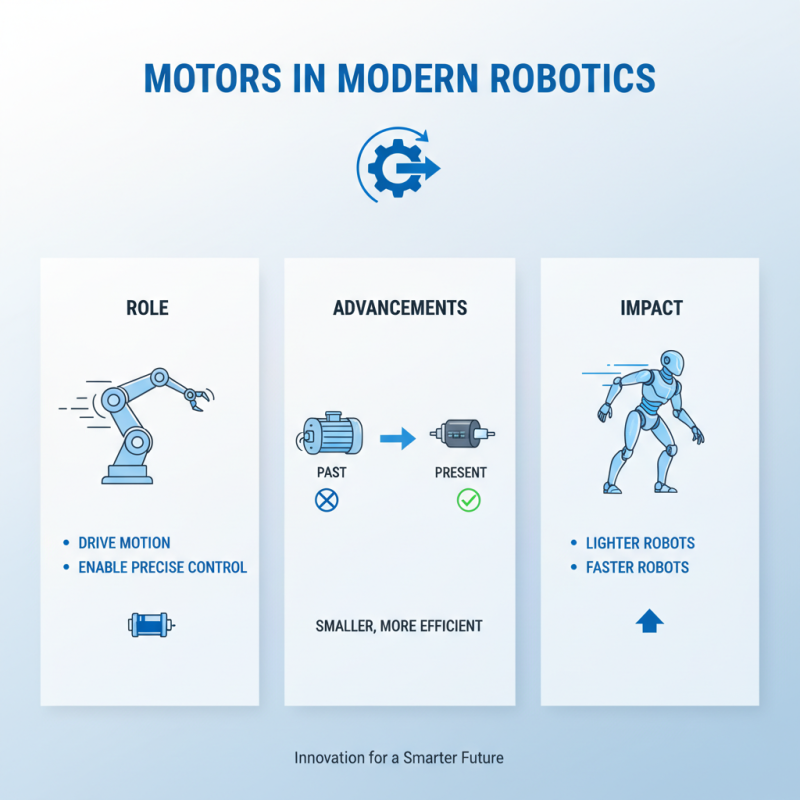
In the realm of modern robotics, motors play a crucial role. They drive motion and enable precise control. The advancements in motor technology have transformed robotics. Today, engineers use smaller, more efficient motors. These innovations lead to robots that are lighter and faster.
Tip: Experiment with different motor types. Understanding the differences can help tailor your design needs.
One significant development is the introduction of brushless motors. They offer higher efficiency and durability compared to traditional brushed motors. These motors can operate for longer periods without overheating. Yet, many builders overlook them, settling for simpler options. This decision may limit what a robot can achieve.
Tip: Always consider weight distribution. A well-balanced robot can perform better, irrespective of motor choice.
Another advancement is the integration of smart motors. These motors often come with built-in sensors. They provide real-time feedback about performance. However, they can be more complex to program. Beginners may find this intimidating. Yet, the benefits can outweigh the initial struggles, enhancing robotic capabilities significantly.
Challenges and Innovations in Robot Motor Design
In the world of robotics, motor design faces numerous challenges. As robots become more advanced, motor efficiency is crucial. According to industry reports, over 50% of a robot’s energy consumption comes from its motors. This highlights a pressing need for innovations in efficiency and performance. Engineers strive to create lighter, more powerful motors. However, balancing power and weight remains difficult.
Adopting new materials can help address these challenges. Advances in magnet technology show promise. However, they also require extensive research and development. Cost is another concern; high-quality materials can lead to increased manufacturing prices. This dilemma raises questions about feasibility and budget constraints.
Tips: Focus on modular designs. They allow for easier upgrades and maintenance. Consider smart motors that adapt to varying workloads. This adaptability can enhance performance and reduce wear and tear. Remember, innovation often involves trial and error. Embrace potential failures as learning opportunities. Revisit motor designs regularly to incorporate the latest findings.