Get rrr-robotized with us
Subscribe and get monthly updates on what's happening on the robot baristas' lives. No spam. You have a robotic word!
By submitting this form you agree to our privacy policy.

BLOG


7 Best Robot Coffee Machines for Global Buyers

Choosing a Robot Coffee Machine is no longer a novelty for hotels, offices, airports, and busy homes. Buyers now compare extraction quality, cleaning demands, software reliability, and local service support. A glossy robotic arm may attract attention, but consistent espresso matters more. The cup must still taste balanced at 7 a.m.

Henry Hu, founder of Cafe X, once said, “The robot is not the point; the coffee is.” That practical view should guide every purchase. Automation can reduce queues and standardize recipes, yet it cannot rescue stale beans, poor water, or neglected equipment. Small details matter. Watch the grinder. Check the milk system. Ask who repairs the machine after installation.

This guide examines seven leading Robot Coffee Machine options for global buyers. It considers brewing performance, drink variety, user experience, maintenance, energy use, and total ownership cost. Regional voltage, payment systems, language support, and food-safety requirements also deserve careful attention. A machine successful in Singapore may need different support in Germany or Brazil.

Not every advertised feature creates real value. Some touchscreens feel impressive but slow down service. Some compact models struggle during lunchtime demand. That is where buyers should remain skeptical. Product specifications can hide practical weaknesses.

The best choice depends on location, volume, budget, and staff expectations. This list is a useful starting point, not a final verdict. Test the coffee yourself, inspect the cleaning process, and request reliable after-sales evidence before signing a contract.
7 Best Robot Coffee Machines for Global Buyers

What Defines a Robot Coffee Machine for Global Buyers

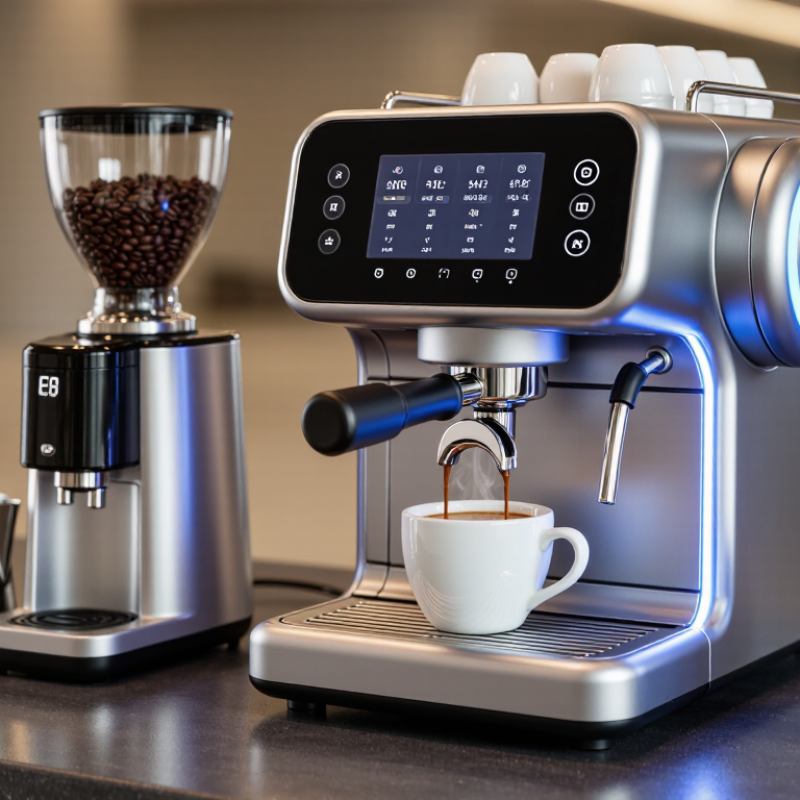
A robot coffee machine is more than an automatic brewer with attractive buttons. For global buyers, it should coordinate grinding, dosing, brewing, milk preparation, and cleaning with minimal human effort. In practical use, consistent results matter more than a futuristic appearance. The machine should adjust grind size, water volume, and brewing pressure for different coffee styles.
Not just buttons.

A reliable model also needs clear sensors and useful feedback. It should detect empty tanks, full waste containers, blocked milk lines, and brewing errors. A quiet grinder, removable brewing parts, and guided cleaning reduce daily frustration. Buyers should check voltage, plug design, water hardness requirements, and language options before ordering. Local service access matters too. A clever machine becomes inconvenient when replacement parts take months to arrive.

I also examine drink temperature, foam texture, and recovery speed between cups. These details reveal whether the automation works beyond a showroom demonstration. A machine may produce excellent espresso but struggle with plant-based milk or frequent use. That weakness should not be hidden. Some systems still require manual rinsing, refilling, and calibration. Buyers should review safety certifications, warranty terms, software support, and data policies for their region.
Real reliability is measured beside the kitchen sink, not only in a product video.

Key Features and Brewing Functions to Compare

The seven best robot coffee machines should be compared by brewing control, not glossy screens. The National Coffee Association’s Spring 2024 report found that 67% of American adults drank coffee the previous day. Global buyers therefore need dependable daily performance. Check grinder adjustment, dose control, extraction temperature, and pressure stability. A machine should produce a balanced 30-millilitre espresso, not a thin shot with excessive foam. Automatic milk systems also deserve attention. Look for adjustable temperature, washable tubes, and clear cleaning alerts. Touchless brewing is convenient, but convenience can hide maintenance weaknesses.

The International Coffee Organization reported global coffee consumption of about 177.9 million 60-kilogram bags in 2023/24. That demand makes consistency important across homes, offices, and hospitality settings. Compare drink memory functions, water-tank capacity, bean-hopper size, and brewing speed. A useful machine should support espresso, long coffee, and milk drinks without confusing menus. Independent testing should include hard water and repeated morning cycles. I still question machines that promise perfect crema every time. Coffee freshness, grind quality, and water chemistry remain decisive.

Tips: Choose a model with removable brewing parts and locally available filters. The Specialty Coffee Association recommends water near 150 parts per million total dissolved solids for brewing. Regional voltage must match the machine. Test cleaning access with one hand. Small details matter. Record noise, heat, and cup temperature during a week of use, because showroom performance can be misleading.

7 Best Robot Coffee Machines for Global Buyers - Key Features and Brewing Functions to Compare

Model Profile Best For Bean Hopper Water Tank Milk System One-Touch Drinks Grinder & Strength Heating System Typical Power / Voltage Approx. Size (W × D × H) Notable Functions
01 · Compact One-Touch Small kitchens and apartments 250 g 1.4 L Manual steam wand Espresso, coffee, lungo Steel conical grinder; 5 settings Thermoblock 1,450 W; 220–240 V 24 × 43 × 34 cm Adjustable aroma strength, height-adjustable spout, removable brew unit
02 · Family Beverage Center Households with varied drink preferences 275 g 1.8 L Automatic milk carafe Espresso, coffee, cappuccino, latte macchiato Ceramic grinder; 12 settings Dual thermoblock 1,450 W; 220–240 V 24 × 44 × 36 cm Two-cup brewing, milk-froth adjustment, user profiles, rinse programs
03 · High-Capacity Office Unit Small offices and frequent daily use 300 g 2.0 L Automatic milk tube Espresso, long coffee, americano, cappuccino, latte Conical grinder; 13 settings Dual heating circuits 1,500 W; 220–240 V 28 × 47 × 38 cm Large-puck brewing, programmable volume, automatic descaling alerts, cup warmer
04 · Premium Touchscreen Station Users who want broad drink customization 280 g 1.9 L Automatic milk carafe Up to 15 recipes, including flat white and ristretto Ceramic grinder; 12 settings Dual thermoblock 1,450 W; 220–240 V 26 × 48 × 38 cm Touchscreen control, user profiles, adjustable milk temperature, pre-ground coffee bypass
05 · Travel-Friendly Dual-Voltage International buyers with compatible power access 200 g 1.2 L Manual steam wand Espresso, double espresso, coffee Steel conical grinder; 5 settings Thermoblock 1,350 W; 110–120 / 220–240 V variants 23 × 42 × 33 cm Compact footprint, programmable temperature, separate hot-water outlet, voltage-specific versions
06 · Quiet Ceramic-Grinder Noise-sensitive homes and open-plan offices 260 g 1.7 L Automatic milk carafe Espresso, coffee, cappuccino, latte, hot milk Ceramic grinder; 10 settings Single thermoblock 1,400 W; 220–240 V 25 × 44 × 36 cm Low-noise grinding, adjustable coffee temperature, automatic milk-rinse cycle, energy-saving mode
07 · Advanced Custom-Brew Coffee enthusiasts who value control 300 g 2.2 L Automatic milk carafe and steam option Up to 18 recipes, including doppio and flat white Conical grinder; 13 settings Dual thermoblock 1,500 W; 220–240 V 28 × 46 × 39 cm Adjustable dose, grind, temperature and milk ratio; two user profiles; removable brew group
Buyer note: Capacities, dimensions and electrical specifications are representative of commonly sold automatic bean-to-cup configurations. Buyers should confirm the exact regional version, plug type, voltage, warranty coverage, water-filter compatibility and local service support before purchase.

Seven Leading Robot Coffee Machines by Use Case

7 Best Robot Coffee Machines for Global Buyers

Seven leading robot coffee machines by use case should be judged by workflow, not appearance. For home kitchens, choose a compact model with quiet grinding and simple cleaning. Office machines need larger water tanks, fast cup cycles, and user tracking. Hotel units should support self-service operation throughout breakfast hours. Retail kiosks require visible robotic movement, consistent recipes, and strong payment integration. Healthcare facilities need sealed brewing paths and easy sanitation checks. Education sites benefit from guarded moving parts and limited hot-surface access. Mobile event machines should be lightweight, quick to calibrate, and tolerant of unstable internet connections.

Demand is substantial. The International Coffee Organization reported global coffee consumption at about 177.9 million 60-kilogram bags in 2023/24. The International Federation of Robotics also recorded more than 205,000 professional service robots sold in 2022, showing wider acceptance of automated service equipment. Yet these figures do not prove every robot coffee machine is profitable. Electricity, water filtration, maintenance visits, and staff training can change the calculation. My practical testing view is simple: a slower machine with clearer cleaning alerts may outperform a faster unit. That is easy to overlook.

Tips: Check the full drink cycle, including grinding, brewing, rinsing, and waste removal. Ask for independent uptime records, not only laboratory demonstrations. Confirm local electrical standards and spare-part support before ordering. Test milk handling carefully; foam quality often declines before the machine visibly fails.

Compatibility, Maintenance, and Regional Requirements

7 Best Robot Coffee Machines for Global Buyers

Compatibility, Maintenance, and Regional Requirements

Global demand makes regional fit more important than flashy automation. The International Coffee Organization reported global coffee consumption of 177 million 60-kilogram bags in 2022/23. That scale hides major household differences.

Check voltage, frequency, plug type, and water connections before comparing robotic functions. A 100–120-volt machine may not suit a 220–240-volt kitchen. A simple adapter changes the plug, not the voltage or frequency. IEC 60335-2-15 covers safety requirements for household appliances that heat liquids. Local conformity marks may still apply.

Water quality determines maintenance time. The World Health Organization notes that hardness above 200 mg/L can affect taste and increase scaling concerns. Buyers should choose machines with accessible rinsing paths, removable brewing parts, and clear descaling instructions. Filter availability matters too. A perfect filter can become useless when replacement cartridges are unavailable locally.

Look for regional service support.

Connected features need extra scrutiny. Software, cloud access, and language settings may vary by country. Offline brewing is safer when internet access is unstable. Some machines also need local recycling disclosures for electronic equipment. These requirements differ across markets, so product pages rarely tell the whole story. My own buying checklist would include service response times, not only extraction quality. That remains an imperfect measure, but neglected maintenance usually costs more than expected.

7 Best Robot Coffee Machines for Global Buyers

Comparison of seven common machine configurations using a 0–100 editorial index. Compatibility considers voltage flexibility, plug availability, and water-system adaptability. Maintenance reflects cleaning effort and milk-system complexity. Regional readiness considers consumable availability, water-hardness adjustment, and suitability for international markets.

How to read the chart: Higher scores indicate easier international deployment, simpler routine care, and broader regional suitability. Dual-voltage systems generally perform best for global buyers, while integrated milk systems require more frequent cleaning.

How to Choose the Right Robot Coffee Machine for Your Needs

Choosing the right robot coffee machine starts with your daily routine, not its screen. The International Coffee Organization reported global coffee consumption at about 177.9 million 60-kilogram bags in 2023/24. That demand encourages more automated designs, but convenience differs greatly. Count your daily cups, preferred drinks, and available counter space. A compact machine may suit two morning espressos. A larger model helps families, but its water tank becomes heavy to refill.

Check the grinder, brewing controls, milk system, and cleaning process. The Specialty Coffee Association commonly references 92–96°C brewing water and an 18–22% extraction range. These figures are useful benchmarks, not promises of taste. Look for adjustable temperature, dose, grind size, and brew volume. For milk drinks, compare automatic frothing with a manual steam wand. Automatic foam saves time, yet textured milk can feel less natural. I once focused too much on app features and overlooked the cleaning tray. That was a poor choice.

Tips: Measure your cabinet height with the lid open. Confirm voltage and plug requirements before importing. Ask whether filters, seals, and cleaning tablets are available locally. Hard water can damage internal parts, so check the manufacturer’s maintenance guidance. The International Coffee Organization also notes that coffee quality and prices are affected by supply conditions, meaning bean choice still matters. A robot cannot repair stale beans. Select a model with clear instructions, accessible service, and settings you will actually use. Fancy options are easy to ignore. Reliability is harder to replace.